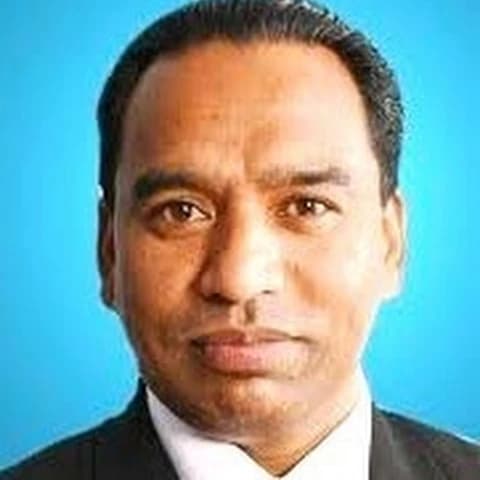


Pakistan committed to peace, security in Afghanistan: advisor to Prime Minister on Foreign Affairs Sartaj Aziz
By. Asghar Ali Mubarak


ISLAMABAD: The advisor to Prime Minister on Foreign Affairs Sartaj Aziz has said his participation in Heart of Asia Conference was aimed at showing the world that bilateral tensions should not overshadow multilateral forums. He was addressing the media in Islamabad on Sunday after attending two-day Heart of Asia Conference at Amritsar in India.
Sartaj Aziz said his visit, despite tensions with India on Line of Control, was highly appreciated by the participants of the conference. He said we wanted to show that we believe in peace and reconciliation in Afghanistan and have complete solidarity and commitment to bring peace and security in the neighboring country.
He said during his interactions at conference, he clearly mentioned that Pakistan is against all forms and manifestations of terrorism and a regional and collective approach is required to overcome this menace. He said he highlighted the steps being taken under National Plan of Action against all terrorist outfits. He said Pakistan does not need pressure on counter terrorism because we have done more in this area in the last three years than any other country in the world.
Sartaj Aziz said that we are now sharing our experiences of counter terrorism with the rest of the world. He said this is a process that we are doing in our own national interest to protect our own security.
Advisor on Foreign Affairs lamented the statement of Afghan President Ashraf Ghani, which he ascribed to frustration due to rising insurgency in that country. He said during his meeting with Afghan President he unequivocally reiterated Pakistan’s position that Islamabad would never allow its soil to be used against any country. A balanced and holistic approach is needed to resolve Afghanistan’s problems.
He said he had fruitful meetings with Iranian Foreign Minister Javad Zarif, Turkmenistan Foreign Minister Rashid Meredov and the Minister of China. He said Turkmen Foreign Minister appreciated Pakistan becoming part of Lapis Lazuli Corridor. He also updated Sartaj Aziz on the status of TAPI pipeline project.
Replying to a question, Sartaj Aziz said our relations with Afghanistan stand independently due to our shared and historical bonds and India cannot divide us. Sartaj Aziz said that the Indian representatives tried not to have the issue of Kashmir discussed at the conference, Afghan President Ashraf Ghani’s statement against Pakistan deserved condemnation. He stated that “Placing blame and making allegations against any country does not eliminate terrorism,” said Sartaj Aziz. He said that during his meeting with the Afghan President, he had assured him of Pakistan’s full cooperation and tried to highlight the importance of ensuring the functioning of an effective monitoring system at the border. “Despite effective border management, peace cannot prevail among both countries,” said Aziz. Sartaj said that it was a good decision to attend the Heart of Asia conference despite the ongoing tensions with arch-rivals India. “Everyone whom I met at the Heart of Asia conference appreciated us attending the conference despite the situation across the Line of Control,” he said. Sartaj Aziz said that security arrangements in India were quite strange since they were not allowed to meet or speak with anyone. “The Indian security officer would not allow us to meet anyone at the hotel,” he said. Aziz said that Pakistan was also a victim of terrorism hence it would not allow any miscreants or terrorists to conduct nefarious activities from its soil. He said that the Indian representatives tried not to have the issue of Kashmir discussed at the conference. Earlier the while addressing the Heart of Asia conference the Afghan President Ashraf Ghani said Taliban insurgents battling his government would not last a month without sanctuary in the neighboring state. He also urged Pakistan to spend around $500 million pledged in aid for Afghanistan to tackle extremism instead. “Despite our intense engagement with Pakistan on bilateral and multilateral basis, the undeclared war… not only has not abated but also intensified during 2016 with special intensity,” Ghani said. Aziz also emphasized that his presence at the meet, despite the escalation of tension along the Line of Control was testimony to Pakistan’s “unflinching” commitment for lasting peace in Afghanistan. He also expressed unhappiness over the cancellation of the Saarc Summit in Islamabad in November, terming it as a “setback” and that it “undermined the spirit of regional cooperation”. Applauding the leadership of Ghani and Afghanistan’s Chief Executive Abdullah Abdullah for making progress in achieving peace and stability in the region, Aziz said the Pakistan government stands in solidarity with the Afghan government.
“Afghan security forces have firmly and bravely stood their ground in repulsing militant and terrorist attacks. The international community has reiterated its commitment of support to Afghanistan in the areas of security and economic development up to 2020. The government and people of Pakistan stand in complete solidarity with the elected government and people of Afghanistan in furthering the objective of peace, stability and development in Afghanistan. We would do whatever we can to help achieve this objective,” he said.
Aziz also pointed out that the peace process for talks between the Afghan government and Taliban has not yet produced positive results through the Quadrilateral Coordination Group (QCG) framework.
“Pakistan has been making serious efforts for facilitating the peace talks through the QCG. We believe that all members of the QCG should continue their respective efforts for talks between Afghan Government and Taliban. In our view, there is no military solution to the Afghan conflict and all our efforts should be to achieve a politically negotiated settlement through an Afghan-led Afghan-owned process,” he said.Aziz said that Pakistan is committed to enhancing facilitation for transit of Afghan goods through Pakistan under the Afghanistan Pakistan Transit Trade Agreement (APTTA).“We believe the two sides need to work together for extension of and improvements in the Afghanistan Pakistan Transit Trade Agreement (APTTA). In this context, let me emphasize that peaceful resolution of outstanding disputes will further improve prospects of regional cooperation and connectivity,” he said. More over Abdul Basit, the Pakistani High Commissioner to New Delhi, scolded an Indian official who was trying to stop Pakistani journalists from speaking to him.Pakistani journalists were trying to speak to Abdul Basit, Pakistan’s High Commissioner to India, when an Indian official tried to prevent them from doing so. Abdul Basit scolded the Indian official “These are Pakistani journalists and these are my people. No one can stop me from speaking to them,” he said. Embarrassed, the Indian official backed off and apologized a couple of times to Abdul Basit.