
Pakistan launches initial US$ 595 million Preparedness and Response Plan to combat COVID-19
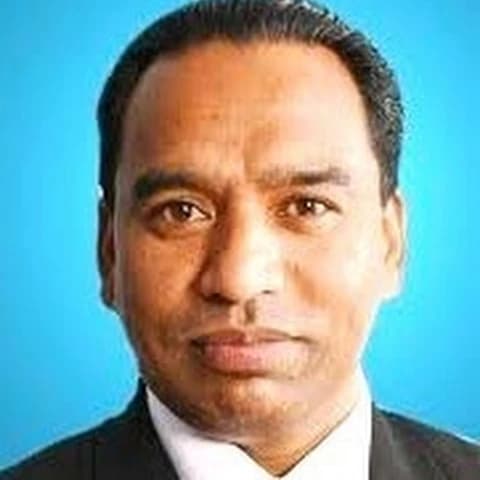
BY;ASGHAR ALI MUBARAK
Today, the Government of Pakistan launched Pakistan’s Preparedness and Response Plan (PPRP) in a bid to suppress and mitigate the spread of COVID-19. The initial Response Plan, worth US $ 595 million, is intended to strengthen Pakistan’s capacity in emergency prevention, preparedness, response and relief and build health systems for a period of 9 months from April to December 2020.
Launching the plan, Foreign Minister Shah Mahmood Qureshi acknowledged and appreciated the efforts of all stakeholders involved in the preparation of the PPRP. He especially paid tribute to the fearless health workers, doctors, nurses and paramedic staff for their services to the people of Pakistan. He shared that saving people both from the pandemic and hunger were top most priorities of the Government. He hailed Pakistan’s inclusive approach and collective response from our leadership towards COVID-19.
Referring to the PPRP as the “blueprint” for Pakistan to fill the gaps to combat COVID19 in Pakistan, he stated that COVID-19 was a “wakeup call for the world” and global solidarity was needed more than ever. He urged the global leaders to come together against a “common enemy”. He underscored that the socio-economic impact of the virus cannot be separated from the health response. While referring to the Prime Minister’s ‘Global initiative on Debt Relief’, he said that Government of Pakistan was reaching out to all relevant stakeholders to craft a comprehensive response to the financial impacts of COVID-19. He thanked the international partners for the zeal and readiness to respond to the needs of the people of Pakistan amidst COVID-19.
At the launch of the response plan, Minister of Foreign Affairs was joined by Makhdum Khusro Bakhtyar, Federal Minister for Economic Affairs, representatives of the National Disaster Management Authority (NDMA), United Nations, World Health Organization (WHO), World Bank (WB), Asian Development Bank (ADB) and other partners from the diplomatic community notably China, EU, US, Canada, France, Republic of Korea and Australia. A large number of
representatives of UN agencies, international organizations, INGOs and media joined the launch virtually as well.
Minister Bakhtyar welcomed the G20 announcement on debt relief as well as programs and support of IMF, World Bank and other international financial institutions (IFIs). Whilereferring to the Government’s package of around US $ 8 billion to combat COVID-19, he added that adequate and meaningful engagement” of multilateral development banks (MDBs) to support the debt relief efforts and risk management to the economies of the developing countries like Pakistan is essential.
Lieutenant General Muhammad Afzal,Chairman, National Disaster Management Authority underlined the exceptional humanitarian circumstances due to this global crisis demanded immediate global attention. He added “support must be given to developing countries like Pakistan to enable them to reduce risk to the population and provide optimal response, recovery and rehabilitation against COVID-19 pandemic”.
As the COVID-19 outbreak ravages the world, Pakistan is also witnessing an increase in the cases over the past few weeks. World can only defeat the pandemic by acting together with exceptional global solidarity and shared responsibility. Stopping the spread of COVID19 in Pakistan is extremely important as it is the fifth-most populous country in the world, with movement of large number of people across the national borders.
The response plan calls on all partners to act together and utilize their resources and expertise to help implement a coordinated response across the country at federal and provincial levels. More specifically, all partners will work towards:
Scaling-up emergency response mechanisms to ensure a whole-of-country and whole-of-society approach;
Launching mass public awareness campaigns on COVID19;
Delivering essential case finding, contact tracing and management in quarantine and isolation facilities;
Expanding surveillance to capture and monitor disease outbreak trends;
Delivering essential public health measures to contain the spread of the virus such as social distancing;
Delivering essential laboratory equipment and capacity building to adequately test for the virus;
Enhancing the capacity of the health system to cope with the surge in patients through delivery of medical supplies and implementation of surge plans;
Providing emergency cash transfers, food rations and support educational activities.
Dr. Tedros Adhanom, Director General of the World Health Organization, speaking on behalf of the partners highlighted that, “The COVID-19 outbreak is creating significant additional pressure on an already overburdened health system, exacerbating the vulnerabilities of affected populations. With
the fast-moving spread of the pandemic, Pakistan requires, now, more than ever, flexible and timely funding, so that it can be allocated quickly to where it is most needed.”
To kick-start the response plan, the World Bank has immediately made available a US$ 240 million package to help Pakistan take effective and timely action to respond to the COVID-19 pandemic. “Our support to Pakistan will help the country enhance its healthcare system to better respond to COVID-19, especially as the outbreak continues to evolve rapidly and affects the vulnerable Pakistanis the most” said Mr. Hartwig Schafer, World Bank Regional Vice President for South Asia. He also emphasized the importance of support to mitigate the socio-economic impacts of the crisis, which the World Bank is also providing.
Talking at the occasion, Mr. Bambang Susantono, Vice President for Knowledge Management and Sustainable Development of the Asian Development Bank said: “We are fully committed to helping Pakistan manage this crisis in close coordination with the International Monetary Fund, the World Bank, the UN system and the global community. We will mobilize flexible and timely financing for the public health response, expand social support and help to bring about the gradual recovery of the economy.” Asian Development Bank has already approved more than US $ 52 million in support for Pakistan’s COVID-19 pandemic response.
All participants shared their common aspiration that acting together in solidarity, these efforts will help to reduce the social and financial impact of the pandemic on the most vulnerable people in society during these difficult times and support economic resilience and recovery. They collectively called on everyone to commit to stemming the impact of COVID-19 in Pakistan and containing the virus by providing the strongest possible support to the response plan. More over talking to participants during the on video link from Pakistan senior Pakistani journalist and founder president diplomatic correspondents forum Pakistan Asghar Ali Mubarak stated that
‘‘’The government of Pakistan has taken unprecedented steps to counter the effects of COVID-19 crisis, but is unclear if these will be enough given the challenges facing the country prior to the pandemic.
While highlighting the issues he said that Pakistan is amongst the 180+ countries dealing with the corona virus pandemic. There are now clear warnings of a global economic recession as workers continue to fall sick, factories remain shutting, and healthcare systems become overwhelmed. Mitigating the health emergency and extent of economic loss will not be easy for Pakistan. The country of over 200 million is already going through a macroeconomic stabilization, and ranks below world average on most human development indicators.
The spread of disease within and into Pakistan cannot be separated from the global context. The world’s urban population at 4.2 billion has now exceeded the global rural population, and almost 40% of Pakistanis live in cities. Meanwhile in the country, close to seven million use air transport.
COVID-19 has already surpassed the death toll of the more recent outbreaks of Ebola, MERS and SARS. While fatalities in Pakistan have as of 23 April Total confirmed cases: 10,927
• Sindh: 3,671
• Punjab: 4,706
• Khyber Pakhtunkhwa: 1,453
• Balochistan: 552
• Islamabad Capital Territory: 204
• Gilgit-Baltistan: 290
• AJK: 51
Deaths: 230
• Khyber Pakhtunkhwa: 83
• Sindh: 73
• Balochistan: 8
• Gilgit-Baltistan: 3
• Punjab: 60
• Islamabad Capital Territory: 3
many more can be unreported. Government estimates suggest by the beginning of June cases in Pakistan could rise to 58,000, while mortalities could lie anywhere between 5 to 10% of this number. In all eventualities, Pakistan’s healthcare system is likely to be overwhelmed.
At the moment, it is hard to calculate and forecast the true impact of corona virus beyond the estimated human toll. The outbreak is on-going, and researchers are continuing to learn about this new form of virus. While the SARS outbreak cost the world $50 billion, initial estimates for corona virus are already suggesting a loss of $360 billion. In Pakistan, relatively localized epidemics (such as Dengue, measles and Hepatitis C) have posed challenges. A full-fledged global pandemic can have dire implications.
A fractured health system
Outbreaks of such scale expose gaps and fractures in the underlying healthcare system. This can be related to the timely detection of disease, availability of basic healthcare, tracing contacts, quarantine and isolation procedures, and preparedness beyond the health sector. All of these issues are especially prominent in resource-constrained settings.
Pakistan spends 2% of its GDP on healthcare, against a global average of 10%. It also fares much worse than its neighbors’, Iran and India, in terms of health-related indicators. The latest data from the World Bank, presented in figure 1 below, show that in 2016 Pakistan spent around $40 per citizen on healthcare. By contrast, the comparative figure in India was $62, and Iran $415. With the growing crisis in Iran despite this higher spending on healthcare per capita, it is clear why policymakers in Pakistan are deeply concerned.
Some feel that Pakistan focuses on public health preparedness only sporadically, mainly as a reaction to episodes when vulnerabilities spike. The country, therefore, lacks a health system that can scale up both detection and treatment too adequately and timely address large-scale outbreaks.
Moreover, disease prevention is not just about a sound health system, but also concerns confronting factors that create conditions for poor health outcomes. For example, certain segments of the population (such as the poor or those with underlying health issues) remain disproportionately at risk of the disease. Low income is associated with higher rates of chronic health conditions such as diabetes and heart disease, and lower uptake of precautionary health measures.
Unequal access to healthcare combined with a lack of social protection
Unequal access to healthcare is a problem for everyone, since this disease does not differentiate between the rich and poor. Yet the poor are far less resilient than the rich in having tools such as access to private health care, better education, and option to work from home, and access to insurance to lessen the shock of such outbreaks. In fact, this particular corona virus can be up to 10 times more deadly for the poor.
The need for social protection is also almost always accentuated during an emergency. In Pakistan, social protection expenditure is just under 2% of GDP, far lower than the global average of 11.6%. Most of the informal sector is not covered by such schemes despite its contribution to the GDP (almost one-third) and employment (72% of all jobs outside agriculture). The Pakistani equivalent of a public distribution system, the Utility Stores Corporation, is grossly underfunded and unlikely to plug gaps if food supply chains are disrupted.
Dealing with resistance
The Government of Pakistan is particularly hampered in its ability to deal with COVID-19 by the social, political and cultural context of the country. Resistance created by community dynamics, local/religious beliefs, political instability, economic fragilities, and a lack of trust in government and institutions, has made Pakistan struggle with far less infectious diseases like polio. The fight against Ebola in Africa was subjected to similar challenges. Pakistan is now facing the same obstacles with coronavirus.
To counter this, mosques have been shut down in most Muslim nations including Saudi Arabia. However, Pakistani policymakers have not adopted such stringent measures for fear of a backlash from the religious wing. They have so far only restrained congregational prayers on Fridays. It is nonetheless important to explore ways of working with religious organizations and leaders to influence outcomes and behavior.
Cooperation between different levels of government
On top of the challenge from religious institutions, within government there are cooperation obstacles that must be overcome. There is a lack of coordination between the federal and provincial governments. Well-coordinated governance structures are critical for a quick and efficient response to such a crisis. As most critical services including health and social protection are now the responsibility of the provinces, each province is making decisions independently. However, border control and aviation remain with the federal government and provinces lack jurisdiction to tighten surveillance at airports.
Moreover, for countries as populated as Pakistan, local governments can play a pivotal role in reducing disease transmission and resistance to health providers by leveraging local networks. An absence of local governments has meant a delay in reaching communities to offer both healthcare and relief.
A major economic downturn
The economic ramifications of the crisis are also significant in Pakistan. A downturn in Pakistan’s GDP growth was anticipated even before the epidemic reached the country. The State Bank had already revised downwards the GDP growth rate to 3% from an earlier estimate of 3.5% for the 2020 fiscal year. The Asian Development Bank also lowered its projected growth rate to 2.6% from an estimated 2.9% while the World Bank has revised it downward to 1.1%. Official assessments estimate an initial loss of PKR 2.5 trillion (around $15 billion)
It has further forecasted an economic loss of up to $5 billion, while official authorities expect anywhere between 12.3 to 18.5 million layoffs.
How is Pakistan responding?
The government of Pakistan has unveiled a PKR 1.13 trillion ($6.76 billion) rescue and stimulus package with a good balance between providing direct assistance to the vulnerable and protecting industry and businesses. The allocation is sizeable but its true impact can only be assessed by how it is implemented. Some of this will be funded by support from the World Bank and Asian Development Bank coming in over the next few months.
Like many other countries, the government is experimenting with various forms of a lockdown. Sindh was the first province to implement a curfew-like lockdown. Karachi faces the most stringent measures compared to anywhere else in the country. Meanwhile, Punjab has implemented a milder form of the lockdown and Khyber Pakhtunkhwa (KP) a partial lockdown. The Prime Minister, Imran Khan, has been adamant against a complete nation-wide lockdown, stating Pakistan’s inability to handle its far-reaching economic ramifications.
Direct investments into healthcare infrastructure and services have also been undertaken. Currently, only half the 2,200 ventilators in Pakistan are functional to treat coronavirus patients. An amount of PKR 50 billion ($298.94 million) has been set aside to purchase medical equipment. Pakistan’s testing capacity has also been enhanced from 30,000 to 280,000 and according to official sources will be further enhanced to 900,000 within April. The government is also contemplating putting in place a Coronavirus Ordinance to speed up procurement and provide protection against personal liability of healthcare professionals. Punjab is using the WHO’s Strategic Preparedness and Response Plan (SPRP) for coronavirus to cost future health-related interventions.
Using technology to create awareness
Pakistan is coming up with innovative smart solutions and exploring the use of technology to create awareness, mitigate the risks, and contain the shock created by such pandemics. To promote public knowledge, the government has, in collaboration with the telecommunication industry, replaced ringtones with an awareness message to the caller about the dangers of Covid-19 and measures that can be taken to remain safe. The government regularly sends an SMS to encourage people to wash hands and practice social distancing. Authorities are also contacting suspects of confirmed cases through mobile tracking and pushing them to get their tests done.
Ensuring food security
Of course, ensuring food security and access to a safety net are just as critical as having a sound health system. The government plans to temporarily abolish all taxes on food items and has announced a significant reduction in oil prices. Payment of utility bills has been deferred for three months for households with bills falling below a certain threshold. A sum of PKR 50 billion ($298.94 million) has been earmarked for government-run utility stores to ensure the constant availability of food and other necessities. PKR 280 billion ($1.68 billion) has been allocated to ensure wheat farmers do not face cash flows and to smooth wheat procurement. The government has also kept funds for logistical support to the National Disaster Management Authority (NDMA), the federal authority mandated to deal with a wide spectrum of disasters, to ensure food supplies.
Furthermore, cash transfers are being leveraged in the country. In fact, Pakistan already has in place one of the world’s most well targeted cash transfer programmes – the Benazir Income Support Programme (BISP). As an immediate top-up to the existing five million families under BISP, the government has enhanced their monthly stipend from PKR 2000 ($13) to PKR 3000 ($20). More recently the government has announced a basic income scheme to provide an emergency cash transfer of Rs 12,000 (compared to a minimum legal monthly wage of Rs 17,500) using data analytics to decide who is eligible to receive cash transfers. It is further expanding the inclusion criteria to provide relief to those on the margins of hunger such as daily wage workers, street vendors, rickshaw drivers, particularly during the lockdown period.
The provincial governments are also gearing up. The government of Sindh is providing relief in cash and kind through a mechanism of self-targeting where the needy call a designated telephone line. The process to determine eligibility is being refined alongside the rollout.
Protecting businesses
Setting the right foundation to kick-start the economy is imperative for the government. The economic stimulus package contains a whole range of fiscal measures (tax breaks, financial support via utilities, fuel and transport subsidies, concessions and tax refunds) to protect exporters and businesspersons. The government has also announced a separate package worth PKR 100 billion ($600.42 million) just for SMEs, which form close to 90% of all enterprises in Pakistan and generate 40% of non-agriculture employment.
The State Bank of Pakistan (SBP) has announced a Temporary Economic Refinance Facility to fuel new investment. This will offer subsidised loans to the manufacturing sector and a Refinance Facility to allow banks to get loans at zero mark-up, which they can offer to hospitals at 3% for five years. The SBP has also reduced the interest rate to 11%, still much higher than other countries that have cut down, but 150 basis points lower than before.
Concluding remarks: The challenges remain severe
Such pandemics expose the inadequacies of the responses of successive governments to poverty, healthcare, and inclusive social protection and governance. While one cannot predict what will spur the next major epidemic and when, early action can help prepare governments to handle it better. However, any strategy that counters such a pandemic must address underlying vulnerabilities. The challenges facing Pakistan in the current crisis are stark, and it remains to be seen whether the huge interventions that the government has undertaken will be enough to mitigate the loss of life and economic hardship.
Pakistan’s Preparedness and Response Plan (PPRP) for COVID-19 is available here: https://unic.org.pk/pprp-covid-19/