Pakistan Congratulates Sri Lanka’s Gotabaya Rajapaksa on Presidential Election Victory
By.Asghar Ali Mubarak
Islamabad:The Government and leadership of Pakistan warmly felicitate the newly-elected President of the Democratic Socialist Republic of Sri Lanka, Gotabaya Rajapaksa, on his electoral victory as the 7th President of the country. Pakistan is confident that under his stewardship, Sri Lanka will continue its journey towards greater prosperity and peace. Pakistan appreciates the conduct of a free, fair and peaceful election by the Election Commission and the Government of Sri Lanka. The leadership of Pakistan looks forward to working with the new President and his team to further strengthen the already strong relationship between the two countries. The Government of Pakistan expresses the resolve to further fortify the fraternal ties and to take this vital partnership to a new level.Gotabaya Rajapaksa, who spearheaded the brutal crushing of the Tamil Tigers 10 years ago, stormed to victory Sunday in Sri Lanka’s presidential elections seven months after terror attacks killed 269 people.The retired lieutenant colonel, nicknamed the “Terminator” by his own family, won 53-54 percent of the vote, his spokesman told media as Rajapaksa’s main rival Sajith Premadasa of the ruling party conceded the race.”It is a clear win. We envisaged it. We are very happy that Gota will be the next president. He will be sworn in tomorrow or the day after,” spokesman Keheliya Rambukwella said. Rajapaksa, 70, had a 49.6 percent share of the vote with close to six million ballots counted. He is the younger brother of the charismatic but controversial Mahinda Rajapaksa, who was president from 2005-15.Results from Sinhalese-majority regions — the Rajapaksas’ core support base — were expected to push this above 50 percent. Premadasa, 52, of the ruling party was trailing at 44.4 percent. He had strong support in minority Tamil areas and a poor showing in larger Sinhalese constituencies.Election Commission chairman Mahinda Deshapriya said at least 80 percent of the 15.99 million eligible voters participated in Saturday’s poll, which was marred by isolated violence that left several people injured.Rajapaksa conducted a nationalist campaign with a promise of security and a vow to crush religious extremism in the Buddhist-majority country following the April 21 suicide bomb attacks blamed on a homegrown terror group.Three luxury hotels and three churches were targeted in the coordinated bombings. ISIS also claimed responsibility for the attack, which left 45 foreigners dead. Saturday’s poll was the first popularity test of the United National Party (UNP) government of Prime Minister Ranil Wickremesinghe, who stepped aside and allowed his deputy Premadasa to stand in the election.Wickremesinghe’s administration faced severe criticism for failing to prevent the attacks despite prior warnings from an intelligence agency of neighbouring India, according to findings of a parliamentary investigation.Premadasa also offered better security and a pledge to make a former war general, Sarath Fonseka, his national security chief, projecting himself as a victim seeking to crush terrorism. He is the son of assassinated ex-president Ranasinghe Premadasa who fell victim to a Tamil rebel suicide bomber in May 1993.Gotabaya is adored by the Sinhalese majority and by the powerful Buddhist clergy for directing security forces to crush Tamil separatists and end a 37-year separatist war in May 2009 with brother Mahinda.But they are detested and feared by many Tamils, who make up 15 percent of the population. The conflict ended with some 40,000 Tamil civilians allegedly killed by the army.Some in the Muslim community, who make up 10 percent of the population, are also fearful of Gotabaya becoming president, having faced days of mob violence in the wake of the April attacks.Under his brother, Gotabaya was defence secretary and effectively ran the security forces, allegedly overseeing “death squads” that bumped off rivals, journalists and others. He denies the allegations.During that time, Sri Lanka also borrowed heavily from China for infrastructure projects and even allowed two Chinese submarines to dock in Colombo in 2014, alarming Western countries as well as India.The projects ballooned Sri Lanka’s debts and many turned into white elephants — such as an airport in the south devoid of airlines — mired in corruption allegations.China also offered Sri Lanka “international diplomatic protection” against criticism for its rights record, analyst Paikiasothy Saravanamuttu told media.The Rajapaksas “spent and spent without giving any consideration to how it has to be paid back”.Unlike in 2015 when there were bomb attacks and shootings, this election was relatively peaceful by the standards of Sri Lanka’s fiery politics.The only major incident was on Saturday when gunmen fired at two vehicles in a convoy of at least 100 buses taking voters from the Muslim minority to vote. Two people were injured.The Sri Lanka’s former wartime defence secretary Nandasena Gotabaya Rajapaksa had 48.2% share of the vote with close to three million ballots counted Election Commission chairman Mahinda Deshapriya said at least 80% of the 15.99 million eligible voters participated in Saturday’s poll. Rajapaksa family is a Sri Lankan family that is prominent in politics. It was one of Sri Lanka’s most powerful families during Mahinda Rajapaksa’s Presidency, where many members of the family occupied their senior positions in the Sri Lankan state .As their political power grew, there were reports suggesting that the country was heading towards autocracy under their ruleFollowing the unexpected defeat of Mahinda Rajapaksa in the 2015 Presidential Election, they have been accused of authoritarianism, corruption, nepotism and bad governance.After the defeat of Mahinda in the 2015 Presidential elections, Colonel Nandasena Gotabaya Rajapaksa was replaced as Secretary of Defence by B.M.U.D. Basnayake a day after the new President was sworn in.It was widely speculated and even claimed by several politicians that Gotabhaya Rajapaksa would be contesting the 2020 elections. However this was denied by Rajapaksa but claimed that he will accept if he was offered the candidacy. On 26 April 2019 he confirmed that he will be contesting the presidential election. In 2019 May, Former Ambassador to Sri Lanka and Assistant Secretary of State for South and Central Asia in the Obama Administration, Robert O. Blake Jr. praised Gotabaya Rajapaksa on the management of the intelligence services during and post war. Lieutenant Colonel Nandasena Gotabaya Rajapaksa, was born on 20 June 1949) is a Sri Lankan politician, technocrat and military officer. He is the elected President of Sri Lanka, having gained a majority in the 2019 Presidential election, which he contested from the Sri Lanka Podujana Peramuna, which is lead by his brother, former President Mahinda Rajapaksa. He served as Secretary to the Ministry of Defence and Urban Development from 2005 to 2015 under the administration of his brother, leading the Sri Lankan Armed Forces to the military defeat of the Tamil tigers, ending the Sri Lankan Civil War.Born to a prominent political family from the south of Sri Lanka, Rajapaksa was educated at Ananda College, Colombo and joined the Ceylon Army in April 1971. Following basic training at Army Training Centre, Diyatalawa, he was commissioned as singles officer and later transferred to an infantry regiment. He saw active service in the early stages of the Sri Lankan Civil War with the elite Gajaba Regiment, taking part in several major offensives such as the Vadamarachi Operation, Operation Strike Hard and Operation Thrividha Balaya, as well as counter insurgency operations during the 1987–1989 JVP insurrection. He took early retirement from the army and moved in to the field of information technology, before immigrating to the United States. He return in 2005, to assist his brother in his presidential campaign and was appointed Defense Secretary in his brother’s administration. During his tenure the Sri Lankan Armed Forces successfully concluded the Sri Lankan Civil War defeating the Tamil tigers and killing its leader Velupillai Prabhakaran. He was a target of an assassination attempt in December 2006 by a Tamil Tiger suicide bomber. Following the war, Rajapaksa initiated many urban development projects. He step-down following the defeat of his brother in the 2015 Presidential election. In 2018, he emerged as a possible candidate for the 2019 Presidential election, which he successfully contested on a pro-nationalistic, economic development and national security platform.The newly elected president Gotabaya Rajapaksa was born in Palatuwa in the Matara District,as the fifth of nine siblings and brought up in Weerakatiya in the southern rural district of Hambantota. According to a writer called Narada Karunthilaka, the name Gotabaya means “Abhaya, the Giant” or “Chinna Kotta” in the Jat language. He hails from a well-known political family in Sri Lanka. His father, D. A. Rajapaksa, was a prominent politician, independence agitator, Member of Parliament, Deputy Speaker and Cabinet Minister of Agriculture and Land in Wijeyananda Dahanayake’s government. His elder brother, Mahinda Rajapaksa was first elected to parliament as a member of the Sri Lanka Freedom Party at the age of 24 in 1970, who gradually rose through the party ranks becoming the Leader of the Opposition in 2001, Prime Minister in 2004 and the President of Sri Lanka in 2005. Two of his other elder brothers, Chamal Rajapaksa and Basil Rajapaksa, are also current Members of Parliament.He obtained his primary and secondary education at Ananda College, Colombo. He has also obtained a Postgraduate degree in Information Technology from the University of Colombo in 1992. Rajapaksa joined the Ceylon Army as a Cadet Officer on April 26, 1971, when Sri Lanka was still a dominion of the British Commonwealth. Following his basic officer training at the Army Training Centre, Diyatalawa, he was commissioned as a second lieutenant on May 25, 1972 in the Ceylon Signals Corps. That year he followed the signal young officers course at the Military College of Signals, Rawalpindi. Thereafter he served with the Sri Lanka Sinha Regiment and the Rajarata Rifles, when he was transferred to the Gajaba Regiment upon its formation in 1983 with the amalgamation of the Rajarata Rifles and Vijayabahu Infantry Regiment. During this time he followed the Infantry company commanders course at the School of Infantry and Tactics, Queta in 1975 and attended the Counter-Insurgency and Jungle Warfare School, Assam in 1980. In 1983, he attended the Command and Staff course at Defence Services Staff College in Wellington and gained a masters in Defence Studies from the University of Madras.On his return, he served as second in command of the 1st battalion, Gajaba Regiment with the rank of Major under the command of Lieutenant Colonel Vijaya Wimalaratne. The 1st Battalion was deployed to the Jaffna peninsula between 1983 to 1984 and again 1985 with the escalation of the Sri Lankan Civil War. He took part in Operation Liberation, the offensive mounted to liberate Vadamarachi from LTTE in 1987. In 1989 he was appointed commanding officer of the 1st Battalion, Gajaba Regiment and served till 1990, commanding it in Operation “Strike Hard” and Operation Thrividha Balaya. During this time he attended the advanced infantry officers course at the United States Army Infantry School, Fort Benning. Promoted to lieutenant colonel, he served as Coordinating Officer for the Weli Oya area from 1990 to 1991, before taking up an appointment as the Coordinating Officer of the Matale District during the 1987–1989 JVP insurrection. In 1991 he was appointed Deputy Commandant of the Sir John Kotelawala Defence Academy and held the position until his early retirement from the army in 1992.During his 20 years of military service, Rajapaksa has received awards for gallantry from three Presidents of Sri Lanka, J.R. Jayewardene, Ranasinghe Premadasa and D.B. Wijetunga. Following his retirement, he read for a postgraduate diploma in information technology from the University of Colombo and joined Informatics, and IT firm based in Colombo as the Marketing Manager. He subsequently migrated to the United States in 1998 and worked in Loyola Law School in Los Angeles, U.S. as a Systems Integrator and Unix Solaris Administrator.
In order to assist his brother’s Presidential election campaign, Rajapaksa returned to Sri Lanka from the United States in 2005. He obtained a dual citizenship from Sri Lanka but kept his US citizenship. Gotabaya Rajapaksa was appointed to the post of Permanent Secretary of the Ministry of Defence in November 2005 by newly elected President Mahinda Rajapaksa. In this capacity he oversaw the military operation which eventually defeated the LTTE in May 2009.
At the public acclaim as a “war hero,” he was conferred Doctor of Letters by the University of Colombo on September 6, 2009. With his position, Rajapaksa also pursued projects like the Colombo Beautification Project, which revitalized public centers and parks in Colombo as well as many other development projects focused on places such as Battaramulla Diyatha Uyana, Ape Gama Park, Wetland Park, Nugegoda, Arcade Independence Square, Weras Ganga Park and Defence Headquarters Complex. In 2011, the Ministry of Defense was renamed to the Ministry of Defense and Urban Development, having absorbed responsibilities related to urban development. Results of his work were remarkable as Colombo became to the top of the list of fast developing cities in the world in 2015 by an annual travel study by MasterCard. On December 1, 2006, at approximately 10:35 an assassin attempted to drive an explosive laden auto-rikshaw into Rajapaksa’s motorcade as it traveled through Kollupitiya, Colombo. The Sri Lanka Army Commandos guarding him obstructed the vehicle carrying the explosives before it reached Rajapakse’s vehicle and two commandos were instantly killed. Rajapaksa escaped unhurt.[21] The LTTE were blamed for the attack.Gotabhaya is credited with using the Karuna faction effectively during the war to defeat the LTTE. The former LTTE commander Vinayagamoorthi Muralitharan, better known as Colonel Karuna, told British authorities that Rajapaksa was instrumental in arranging for him to be issued with a false diplomatic passport so that he could flee to Britain in September 2007. These allegations were denied by the Sri Lankan Foreign Minister Rohitha Bogollagama at the time, and later by Rajapaksa. In June 2007, Rajapaksa was severely critical of the United Nations (UN) and of western governments. He accused the UN of having been infiltrated by terrorists “for 30 years or so”, and as a result the UN was fed incorrect information. He also alleged that Britain and the EU were bullying Sri Lanka, and concluded that Sri Lanka “does not need them”, and that they don’t provide any significant amount of aid to the country. Ironically in 1990 his brother Mahinda Rajapaksa was caught attempting bring evidence of human rights violations to the United Nations Commission on Human Rights and the evidence was confiscated by the government during which Rajapaksa justified foreign intervention in Sri Lankan affairs. The person that demanded western nations to limit and put conditions on foreign aid was also Mahinda Rajapaksa.On 3 February 2009, Defense Secretary Gotabhaya Rajapaksa stated to the international media (in reference to the only hospital in the war front being shelled), that everything is a legitimate target if it’s not within the safe zone the government has created and that all persons subject to attack by the armed forces were legitimate LTTE targets as there are no independent observers, only LTTE sympathizers, radio announcements were made and movement of civilians started a month and a half ago.As per wikileaks, General Sarath Fonseka who lead the war against LTTE had accused Defense Secretary Gotabhaya Rajapaksa of ordering at the end of the war the shooting of any LTTE leaders who might try to surrender under flags of truce. But Mr. Gotabhaya alleged to have threatened to execute Mr. Fonseka if he had spilled any war secrets. In an interview on the Sri Lanka TV channel adaderana on March 16, 2015, Mr Rajapaksa stated that he is a citizen of the United States but cannot travel to the United States because of alleged war crimes charges against him. However, Rajapaksa visited the United States in 2016 and two Tamil groups have urged the United States government to arrest and prosecute him. Sri Lankan government rejected to support the call to arrest Rajapaksa by Tamil groups. As reported by MEDIA, Major General Prasad Samarasinghe, the former military spokesman and director of the Directorate of Media in the army, has been passing highly sensitive information to the US Embassy in Colombo on abductions. Many of those abducted were believed to have been individuals who had fallen foul of the Rajapaksa trio, Mahinda, Basil and Gotabhaya. During her visit to the country, United Nations Human Rights Commissioner Navanetham Pillay expressed her disappointment over “white van” related disappearances reported in Colombo, and other parts of the country, which were not covered by the Commission of Inquiry on Disappearances set up by the government. Investigations on the 2008 abduction of journalist Keith Noyahr resulted in a White Van being discovered in 2017 March from a house at Piliyandala with connections to an Army Major that was believed to have been used for the abduction. Police believes that the van may have been used for other crimes as well as being part of the operation to murder Lasantha Wickrematunge.[37] A few weeks after the Keith noyahr abduction in 2008 Namal Perera a course coordinator at the Sri Lanka College of Journalism was violently attacked by a gang that came in the same White Van with a fake number plate and attempted to abduct him after attacking his car but was foiled by residents and heavy traffic. Namal Perera identified two of his would-be-killers Duminda Weeraratne and Hemachandra Perera in April 2017.Bandara Bulathwattewas a key suspect in the murder of Lasantha was given a diplomatic post in Thailand at the request of Gotabhaya Rajapaksa near the 2010 presidential election. The letter sent bt Gotabhaya was prepared in haste and even a bio data of Bulathwatte was not attached despite it being a requirement for him to get his visa and have the appointment regularised by the foreign ministry. But after the elections Gotabhaya requested his departure to be postponed claiming a urgent matter regarding national security. Technical evidence and telephone records have placed Bulathwatte at the location where Lasantha was killed as well as in the places where other journalists were attacked. Investigations on assassinations, abductions and assaults on journalist after the fall of the Rajapaksa government revealed that Gotabhaya directed a death squad to attack journalists that was outside the Army command structure during this time 17 journalists and media workers were killed and others were either assaulted or abducted.Nadarajah Raviraj, a well-known human-rights lawyer and a parliamentarian, was shot and killed in Colombo on 10 November 2006. At a magisterial hearing in Colombo on 26 February 2016, Liyanarachchi Abeyrathna, a former policer officer attached to the State Intelligence Agency, stated that Gotabhaya Rajapaksa paid Rs. 50 million to a terror organization led by Colonel Karuna to murder Mr. Raviraj. Rajapaksa has been accused of threatening journalists on several occasions, including telling two journalists attached to the state-owned Lake House Publications that unless they stop criticising the armed forces “what will happen to you is beyond my control”. When asked by the two journalists if he was threatening them, he replied “I am definitely not threatening your lives. Our services are appreciated by 99 per cent of the people. They love the Army Commander (General Sarath Fonseka) and the Army. There are Sri Lankan patriots who love us do and will do what is required if necessary, In April 2007 he was accused of allegedly calling the Editor of the Daily Mirror Champika Liyanaarachchi and threatening her, saying that she would escape reprisals only if she resigned. He was also accused for threatening to “exterminate” the Daily Mirror journalist Uditha Jayasinghe for writing articles about the plight of civilian war casualties.
A December 5, 2008 story from The New York Times quoted his news reporting position as “he insists that journalists should not be allowed to report anything that demoralizes the war effort”.
In the editorial titled A brother out of control (August 16, 2011), Media raised the observation, “President Rajapaksa would be well advised to distance himself swiftly from his brother’s stream-of-consciousness on sensitive issues that are not his business. This includes an outrageous comment that because a Tamil woman, an “LTTE cadre” who was a British national, interviewed in the Channel 4 documentary was “so attractive” but had been neither raped nor killed by Sri Lankan soldiers, the allegation of sexual assault by soldiers could not be true. For this statement alone, Mr. Gotabaya Rajapaksa must be taken to task. In 2015 May, The Sunday Leader tendered an unconditional apology to Gotabhaya Rajapaksa for a series of articles regarding the purchase of MIG 27 airplanes for the Sri Lanka Air Force.]Deceased MP Sripathi Sooriyarachchi, assassinated journalist Lasantha Wickrematunge and others had accused Rajapaksa of corruption since 2006. In 2015 Interpol provided further evidence to the Sri Lankan government on corrupt military procurements. In March 2015 at Sri Lankan court imposed a travel ban on Rajapaksa over allegations he used a commercial floating armory as a private arsenal The travel ban was lifted by the court on December 2016. His son is also accused of illegally occupying a house rented for a consulate in Los Angeles and caused millions of rupees in losses to the state. Rajapaksa rejected the allegations regarding occupying a house rented for a consulate in LA.After the defeat of Mahinda in the 2015 Presidential elections, he was replaced as Secretary of Defence by B.M.U.D. Basnayake a day after the new President was sworn in. It was widely speculated and even claimed by several politicians that Gotabhaya Rajapaksa would be contesting the 2020 elections. However this was denied by Rajapaksa but claimed that he will accept if he was offered the candidacy. On 26 April 2019 he confirmed that he will be contesting the presidential election.In 2019 May, Former Ambassador to Sri Lanka and Assistant Secretary of State for South and Central Asia in the Obama Administration, Robert O. Blake Jr. praised Gotabaya Rajapaksa on the management of the intelligence services during and post war.In September, 2018 Director of the Anti Corruption Movement revealed a conspiracy to assassinate President Maithripala Sirisena and former Defence Secretary Gotabaya Rajapaksa because the duo are against the drug trade. CID of Sri lanka Police currently investigating the issue.In April 2019 Ahimsa Wickrematunge the daughter of Lasantha Wickrematunge filed a lawsuit against Rajapaksa in the state of California. Rajapaksa,while on vacation in the United States was served notice of two civil lawsuits.In October 2019, the court in California rejected the case cased on lack of jurisdiction to consider Wickrematunge’s claims, because, in the Court’s view, Rajapaksa is entitled to common law foreign official immunity for the alleged acts of torture, extrajudicial killing, and crimes against humanity.On 11 August 2019, Sri Lanka Podujana Peramuna led by former president Mahinda Rajapaksa announced that Gotabaya Rajapaksa will be their candidate for the 2019 Presidential election. Rajapaksa campaigned on a on a pro-nationalistic, economic development and national security platform in which he gained 6,924,255 votes, which was 52.25% of the total cased votes and 1,360,016 votes majority over New Democratic Front candidate Sajith Premadasa, and became the President-Elect on 17 November 2019.During the campaign, several political parties including then ruling United National Party accused him for having American citizenship and claimed that he stayed and lived in America for more than ten years and revealed that he was not a Sri Lankan citizen. Gotabhaya was also pressurised to not to contest at the Presidential elections because of holding dual citizenship. Further he was alleged to have carried a duplicate Sri Lankan passport with him and court cases were pending against him over the citizenship issue and the issue regarding his passport. Former President and the elder brother of Gotabhaya, Mahinda Rajapaksa was also accused of using his executive powers to grant his brother, the Sri Lankan citizenship after commencing his first term as President in November 2005. The judge of the Court of Appeal gave verdict on the former’s pending court cases on 4 October 2019, dismissed the petition challenging Gotabhaya’s citizenship. He was also allowed to contest at the elections but didn’t take part in the debate among Presidential candidates which was held on 5 October 2019, was also historically Sri Lanka’s first ever debate to have been conducted among Presidential candidates for an upcoming election.
Pakistan Congratulates Sri Lanka’s Gotabaya Rajapaksa on Presidential Election Victory… By.Asghar Ali Mubarak

Asghar Ali Mubarak
Related coverage
More reports you may want to read next.
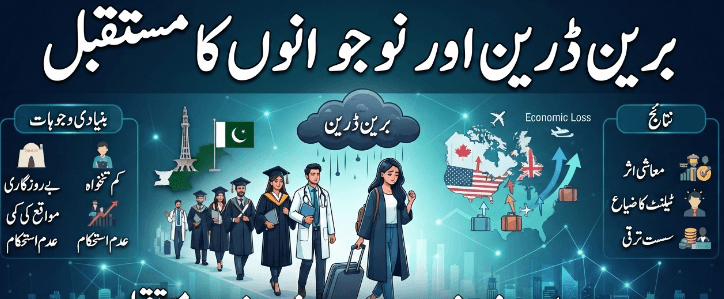
(علیزہ شمشاد چوہدری )برین ڈرین اور نوجوانوں کا مستقبل
برین ڈرین اور نوجوانوں کا مستقبل: (علیزہ شمشاد چوہدری ) ہوائی اڈوں کے ڈیپارچر لاؤنجز میں چھائی اداسی، آنکھوں میں تیرتے آ…
Brain Drain and the Future of Youth:(Aliza Shamshad Chaudhry)
Brain Drain and the Future of Youth: (Aliza Shamshad Chaudhry) The sadness in the departure lounges of airports, tears i…
· Updated
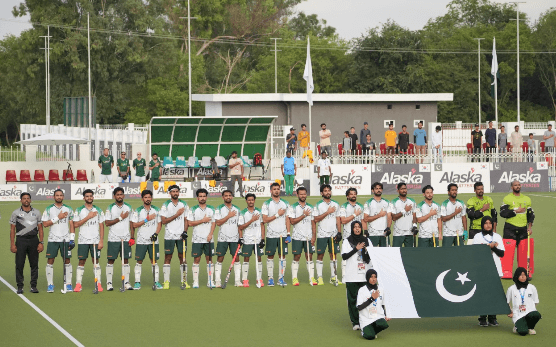
دوسرے ٹیسٹ میچ میں قومی ہاکی ٹیم کی جارحانہ کھیل سے جنوبی کوریا کو 1-3 سے شکست
پاکستان ہاکی فیڈریشن (پی ایچ ایف) کے زیرِ اہتمام نصیر بندہ ہاکی اسٹیڈیم اسلام آباد میں جاری چار میچوں کی تاریخی دو طرفہ…