
A personal narrative
Narrative ON The fall of Dhaka black day of Pakistani history:
By; AsgharAli Mubarak


December 16, 1971 was black day of Pakistani history. We had just turned of the Radio after the ritual of Gen. (Tiger) Niazi surrendering East Pakistan to an Indian commander in the evening news when phone rang.
From previous experience I must admit that our compatriots had not been inclined to take our “leftist” ideas seriously.
we still debate what went wrong in 1971, we might assess the current geopolitical changes to make sense of the things that surround us now and develop our own vision in the context of what we can learn from the 1971 war
Thirty nine years after East Pakistan went through a blood bath and emerged as an independent nation of Bangladesh, we now live in a different kind of world. Since the two archrivals India and Pakistan fought in what was then East Pakistan, new geopolitical dynamics have drastically changed the South Asian and international scene.
Terrorism has become the paramount fixation of today’s world after the cold-war era evaporated. America has come closer to our borders in Afghanistan in the aftermath of 9/11. With the disappearance of the Soviet empire, we now live in a unipolar world where America is the top, unchallenged game player. The legendary Indo-Soviet friendship is going into oblivion while India and the United States have just entered into a new era of friendship and collaboration. And surprisingly, Asia is preparing to lead the world with China and India strategizing their game plans on how to become superpowers of the future.
With this backdrop, while we still debate what went wrong in 1971, we might assess the current geopolitical changes to make sense of the things that surround us now and develop our own vision in the context of what we can learn from the 1971 war.
The unfortunate scenario of 1971 looks like a classic story of internal colonialism. From the beginning we treated East Pakistan as our colony economically, politically and culturally. Although Bengalis were in majority the idea to share power with them always haunted us. While Quid-e Azam was announcing in Dhaka that Urdu will be our national language, Mujib was protesting the decision right outside the auditorium as a firebrand student leader. The mainstream thinking at the time that a single language can unite a nation, ignoring the fact that East Pakistanis had their own, centuries old language, literature and culture, was deeply rooted in colonializing the Eastern part of the country. The idea did not strike us that language and religion alone cannot unite a nation and it is actually economic, cultural and political parity and equal distribution of power that can develop a sense of unity between the two parts of the country, about one thousand miles a apart from each other.
The events of 1971 were only an outburst of increasing frustrations and grievances of the Bengali population from 1947 to 1971 which were further exacerbated by the army action and the atrocities committed by the armed forces of West Pakistan. The Hamood Ur Rehman Commission Report analyzing the war widely held the West Pakistan army responsible for the events. The report concluded that the responsible army officers “have asserted before us that because of corruption resulting from such involvement, the lust for wine and women and greed for lands and houses, a large number of senior army officers, particularly those occupying the highest positions, had lost not only their will to fight but also their professional competence.”
The report, consequently, demanded to try the responsible army officers including General Yahiya Khan but none was tried. The three key players who were involved in the 1971 war met with a tragic ending. Yahiya Khan resigned in disgrace, Mujibur Rehman who became prime minister of Bangladesh was assassinated in a bloody coup in 1975 and Zulfiqar Ali Bhutto who became prime minister of Pakistan was overthrown by General Ziaul Haq and finally he was hanged in 1979.
Here are eight lessons we might learn from this important chapter of our history:
1.1 All wars are political
Although wars are fought by the armed forces they are initiated, operated and come to an end through political means all over the world. Military alone cannot win a war itself. It takes a combination of political insights and defense strategies both to win a war. The issues between East and West Pakistanis in 1971 were inherently political that involved three dimensions of power, control and economy. Instead of resolving these issues we tried to get rid of them through the military force which ultimately backfired.
1.2 All wars are internal, regional and international
Although internal issues of how we treated Bengalis gave birth to the events of 1971, the final war became part of international and regional affairs involving India, the United States, Soviet Union and China. The United States tilted toward Pakistan for its own vested interest as Pakistan was playing an intermediary role to connect U.S. with China incidentally during the same time. Soviet Union in retaliation sided with India. With that the internal conflict was transformed into a regional and international war at the same time.
1.3 National conflicts are internal with a capacity to become international
National conflicts are deeply rooted in internal complexities of burning issues and if we do not resolve those issues internally they can easily transform into larger, regional and even international conflicts. The 1971 war is a classic example of this where we failed to address grievances of the Eastern wing which ultimately led to a regional war.
1.4 Beware of the goliath near you
This was true in 1971 as it is true today. It was India in 1971 that took advantage of the vulnerabilities of the West Pakistan Army fighting in an area far away from their home and isolated from the native Bengali population. Today we are not only surrounded by the two aspiring superpowers, India and China, we also have a superpower right on our doorsteps in Afghanistan. Additionally, there are three nuclear powers in the vicinity: China, India and Russia.
1.5 War is not solution, dialogue is
Wining people’s heart is more important than invading their land. Issues should be resolved with negotiations and dialogues, not violence.
1.6 Religion alone is not enough for unity
If religion alone would be enough for unity the Middle Eastern Muslim nations would have been one nation under a single flag. There are other realities that unite people including the economic interest, common history, cultural links and geopolitical realities. We cannot ignore these factors to forge an artificial unity of people.
1.7 Never underestimate people’s power
People are the real source of power, which should not be underestimated. We ignored this in 1971 spreading the unfounded myths that Bengalis are racially and culturally inferior to West Pakistanis.
1.8 Democracy demands fairness
Democracy is the game of fairness and it demands an equal treatment of all partners involved. Treachery, dishonesty and injustice do not go hand in hand with the norms of democracy. The election on December 7, 1970 was based on the principle of one-person-one-vote with the knowledge that Bengalis were in majority but its outcomes were never accepted which started the conflict.
Some say the way the British rulers structured Pakistan at the time of independence, with two separate wings, the nation was destined to break up at some point. Even if we believe 1971 was that point, it does not justify the sins our political leaders and the army committed in 1971. If we do not learn from history, it always comes back to haunt us!
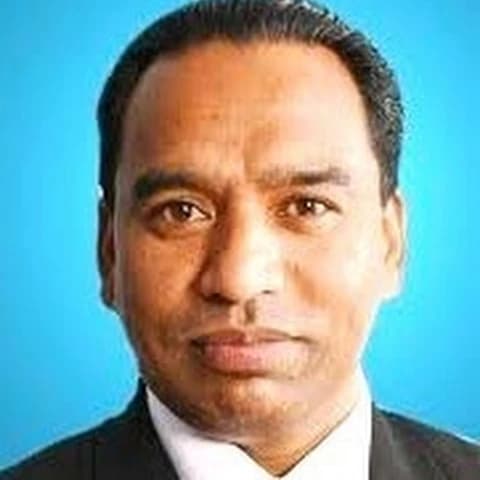
While interviewing PoW 1971, Maj (r) Sabir Hussain, HI(M).

Geo lady reporter Farhat Javed Rabani with cameraman Khaleeq Ahmed.
While interviewing PoW 1971, Maj (r) Sabir Hussain, HI(M).


The arrest of the Bengali politician Sheikh Mujibur Rahman in 1968 would also spark intensive political protests and violence against the military regime of Ayub Khan. The 1970 Bhola cyclone devastated much of the region, killing numerous people. More than half the city of Dhaka was flooded and waterlogged, with millions of people marooned. The same year, Sheikh Mujibur Rahman won a landslide victory in general election. He was elected as the next president of Pakistan. However, the West Pakistan’s military rulers and even the largest opposition party’s (PPP) leader Zulfiker Ali Bhutto refused to hand over the presidency to East Pakistan leadership. The following year saw Sheikh Mujib hold a massive nationalist gathering on March 7, 1971 at the Race Course Ground that attracted an estimated one million people. Galvanising public anger against ethnic and regional discrimination and poor cyclone relief efforts from the central government, the gathering preceded near total consensus among East Pakistan population for independent movement. In response, on March 25, 1971 in the middle of the night, the Pakistan Army launched Operation Searchlight, which led to the arrests, torture and killing hundreds of thousands of people – just in the that night alone. As a result, on behalf of East Pakistan leader Sheikh Mujibur Rahman, a Bengali army Major named Ziaur Rahman (later General & President) declared Bangladesh’s independence on March 26, 1971. This resulted in further mass genocide of approximately 3 million people. Citizens and intellectuals from Dhaka was the largest victim of this mass genocide. The fall of the city to the Indian Army on December 16, 1971 marked the creation of the independent state of Bangladesh. Dhaka became the capital of Bangladesh.Several prominent architectural development took place in Dhaka during this period. Holy Family Hospital was built in March 1953. New Market was established in Azimpur in 1954.] Dhaka College was moved to Dhanmondi in July 1956.] Kamalapur railway station was established in 1969. Dhaka became the capital of East Bengal under the Dominion of Pakistan. The city witnessed serious communal violence that left thousands of people dead. A large proportion of the city’s Hindu population departed for India, while the city received hundreds of thousands of Muslim immigrants from the Indian states of West Bengal, Assam and Bihar. Population increased from 335,925 in 1951 to 556,712 in 1961 registering an increase of 65.7 percent As the centre of regional politics, Dhaka saw an increasing number of political strikes and incidents of violence. The proposal to adopt Urduas the sole official language of Pakistan led to protest marches and strikes involving hundreds of thousands of people in Bengali Language Movement. The protests soon degenerated into widespread violence after police firing killed students who were demonstrating peacefully. Martial law was be imposed throughout the city for a long period of time. Despite independence, political turmoil continued to plague the people of Dhaka. The Pakistan Army’s operations had killed or displaced millions of people, and the new state struggled to cope with the humanitarian challenges. The year 1975 saw the killing of Sheikh Mujib and three military coups. The city would see the restoration of order under military rule, but political disorder would heighten in the mid-1980s with the pro-democracy movement led by the Awami League and theBangladesh Nationalist Party. Political and student strikes and protests routinely disrupted the lives of Dhaka’s people. However, the post-independence period has also seen a massive growth of the population, attracting migrant workers from rural areas across Bangladesh. A real estate boom has followed the development of new settlements such as Gulshan, Banani and Motijheel. In 1985, Dhaka hosted the inaugural summit of the South Asian Association for Regional Cooperation. It has also hosted the summits of the D8 group and the Organisation of the Islamic Conference.Dhaka has always been the most populous city of East Bengal throughout the history and currently it has an estimated population of more than 15 million people, making it the largest city in Bangladesh and the 9th largest city in the world.Dhaka, formerly spelled as Dacca in English, is the capital and one of the oldest cities of Bangladesh. Thehistory of Dhaka begins with the existence of urbanised settlements in the area that is now Dhaka dating from the 7th century CE. The city area was ruled by the Buddhist kingdom of Kamarupa before passing to the control of the Sena dynasty in the 9th century CE.[2] After the Sena dynasty, Dhaka was successively ruled by the Turkic and Afghan governors descending from the Delhi Sultanate before the arrival of the Mughals in 1608. After Mughals, British ruled the region for over 150 years until the independence of India. In 1947, Dhaka became the capital of the East Bengal province under the dominion of Pakistan. After the independence ofBangladesh in 1971, Dhaka became the capital of the new state.
Geo lady reporter Farhat Javed Rabani with cameraman Khaleeq Ahmed.
While interviewing PoW 1971, Maj (r) Sabir Hussain, HI(M).