PAF,GUARDIANS OF THE SKIES: A COMPREHENSIVE HISTORY OF THE PAKISTAN AIR FORCE AND THE LEGACY OF THE SHUHADA
By Asghar Ali Mubarak
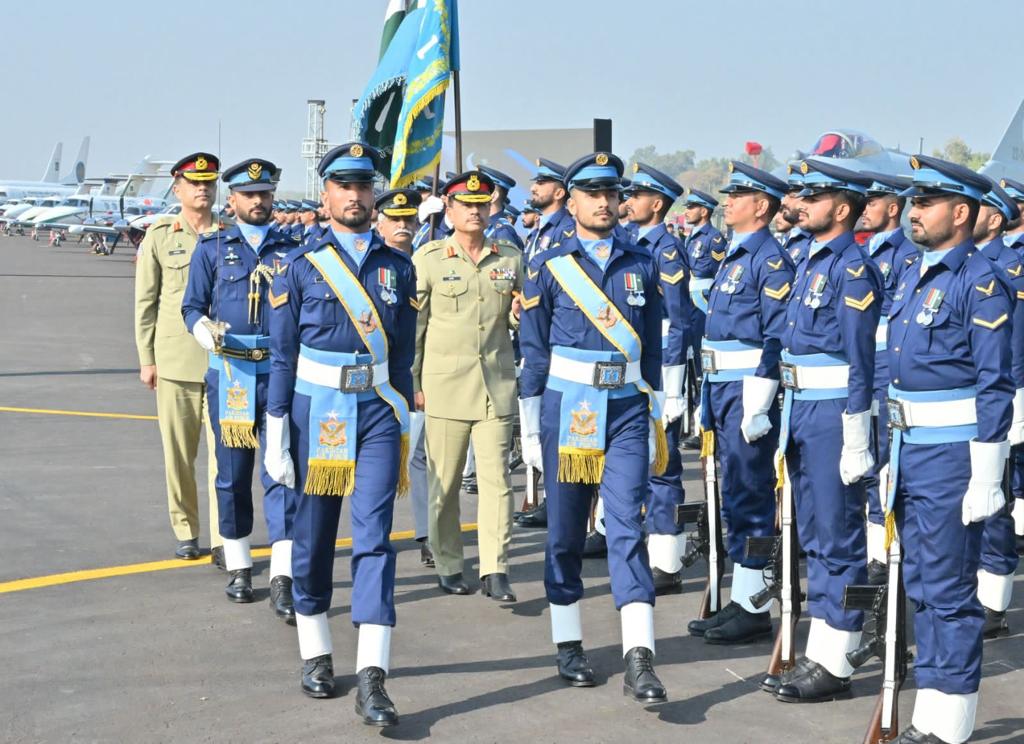
RAWALPINDI / ISLAMABAD — Every year on the 7th of September, Pakistan halts to pay homage to the ultimate guardians of its sovereign skies. Air Force Day—observed with solemnity, Quran Khawani, and floral wreaths at Air Headquarters—is not merely a calendar date; it is an enduring tribute to a legacy forged in steel, fire, and unyielding faith. From its humble beginnings in 1947 to its modern status as a highly lethal, tech-centric force, the Pakistan Air Force (PAF) has consistently neutralized numerically superior adversaries through superior training, tactical brilliance, and the unmatched courage of its personnel.
The Genesis: Birth of a Nation’s Vanguard (1947–1950s)
The story of the PAF began on August 14, 1947, with the partition of the Royal Indian Air Force. The fledgling Royal Pakistan Air Force (RPAF) inherited a meager share of assets: two fighter squadrons of Hawker Tempests, a handful of Tiger Moth trainers, and a few Dakota transport aircraft. Compounding the material shortage was a severe lack of infrastructure and technical personnel.
Under the early leadership of British air officers like Air Vice Marshal Allan Perry-Keene, and subsequently the first Pakistani Air Chief, Air Marshal Asghar Khan, the air force underwent a profound structural transformation. Asghar Khan focused heavily on strict discipline, world-class training centers like the PAF Academy Risalpur, and the acquisition of jet-engine technology. By the mid-1950s, Pakistan entered the jet age by inducting American-made F-86 Sabres and F-104 Starfighters under mutual defense pacts, setting the stage for tactical supremacy in the region.
The Finest Hour: The 1965 Indo-Pak War
The true baptism of fire for the PAF occurred during the September 1965 War. Facing an Indian Air Force (IAF) that held a numeric superiority of nearly 3.5 to 1, the PAF delivered a masterclass in defensive and offensive air operations.
- The Legend of MM Alam: On September 7, 1965, Squadron Leader Muhammad Mahmood Alam (MM Alam) achieved an unmatched feat in aviation history. Flying his F-86 Sabre over Sargodha, he shot down five Indian Hawker Hunter fighters in less than a minute, four of them within 30 seconds. His historic feat remains a cornerstone of aerial warfare doctrines worldwide.
- Pre-emptive and Counter-Air Strikes: Led by tactical visionaries, PAF pilots executed highly daring raids deep into enemy territory. Operational bases such as Pathankot, Kalaikunda, and Adampur were struck with pinpoint accuracy, destroying dozens of enemy aircraft on the tarmac and crippling the adversary’s offensive capability early in the conflict.
- Total Air Superiority: By September 7, through relentless interception and ground-attack missions supporting the Pakistan Army at Chawinda and Lahore, the PAF established total air superiority over the combat zones. The sheer determination displayed during these critical 17 days earned September 7 its permanent status as Air Force Day.
Valor Amid Adversity: The 1971 War
The 1971 conflict presented a vastly different, geometrically complex strategic challenge. Geographically isolated and surrounded on all sides, the No. 14 Squadron (“Tail Choppers”) based in Dhaka, East Pakistan, faced overwhelming odds.
- The Battle of Boyra & Dhaka Skies: Armed with aging F-86 Sabres and lacking radar support, a handful of PAF pilots fought gallantly against waves of IAF MiG-21s, Gnats, and Hunters. Even as the runways at Tejgaon were cratered under heavy bombardment, PAF pilots continued to take off until the final hours, striking down multiple enemy jets before being completely grounded due to non-availability of functional airstrips.
- Western Sector Operations: In the Western theater, the PAF maintained a highly aggressive stance, conducting successful deep-penetration night bombing missions against enemy airbases and executing critical close air support operations that blunted armored thrusts in the desert and northern sectors.
The Cold War Era and the Afghan Border Management (1980s)
The Soviet invasion of Afghanistan in 1979 brought the theater of war directly to Pakistan’s western frontiers. Soviet and Afghan Su-22 and MiG-23 jets frequently violated Pakistani airspace, necessitating a robust, high-tech response.
The induction of the General Dynamics F-16 Fighting Falcons in the early 1980s fundamentally shifted the air balance. Utilizing these advanced platforms, PAF pilots maintained a strict Combat Air Patrol (CAP) regime along the Durand Line. During this protracted border friction, the PAF successfully shot down over a dozen intruding Soviet and Afghan aircraft, proving its capability to master cutting-edge fly-by-wire fighter technology and advanced radar-guided air-to-air weaponry.
Indigenization and Strategic Self-Reliance: The JF-17 Thunder Era
Realizing the vulnerabilities of foreign military sales and shifting geopolitical alignments, the PAF altered its long-term doctrine toward indigenization in the late 1990s and 2000s. The crown jewel of this shift is the JF-17 Thunder program, co-developed with China and manufactured locally at the Pakistan Aeronautical Complex (PAC), Kamra.
The JF-17 has evolved through Block I, II, and the latest Block III configurations, integrating advanced Active Electronically Scanned Array (AESA) radars, long-range helmet-mounted sights, and PL-15 beyond-visual-range (BVR) missiles. By manufacturing its own multi-role fighter jets, Pakistan successfully mitigated the risk of international sanctions, achieving a high degree of strategic self-reliance.
Modern Epoch: Operation Swift Retort (2019)
The tactical brilliance of the PAF was re-demonstrated to the world on February 27, 2019, during Operation Swift Retort. Following a violation of Pakistani airspace by Indian jets at Balakot, the PAF responded with a calculated, daylight counter-offensive.
Locking onto multiple military targets in Indian-administered Kashmir with stand-off weapons during broad daylight, the PAF drew the enemy’s air defense assets into a tactical trap. In the ensuing dogfight, a PAF package cleanly shot down an Indian MiG-21 Bison and an Su-30MKI. The Indian MiG pilot, Wing Commander Abhinandan Varthaman, was captured alive on the ground, serving as a stark, modern testament to the PAF’s maintained edge in operational readiness, equipment integration, and superior human resource quality.
Paradigm Shift: The Multi-Domain Triumph in Marka-e-Haq (2025)
The most profound leap in the history of Pakistan’s air defense occurred during Marka-e-Haq. Triggered by escalating tensions along critical strategic corridors, the confrontation forced a historic tactical shift. Facing the adversary’s deployed long-range networks, Chief of the Air Staff Air Chief Marshal Zaheer Ahmed Baber Sidhu deployed a newly conceived, highly sophisticated integrated strike doctrine.
- Aerospace Synergy and Alert: The PAF activated a fully calibrated multi-domain defensive posture. This synchronized manned combat aircraft, unmanned combat aerial vehicles (UACVs), space-based reconnaissance assets, and advanced electronic warfare systems to maintain absolute full-spectrum awareness.
- Neutralization of Strategic Anti-Air Networks: In a masterclass of modern hybrid warfare, the PAF’s electronic and cyber warfare specialists deployed specialized assets that effectively jammed and neutralized the adversary’s premier strategic surface-to-air missile networks early in the engagement.
- The Dynamic Dogfight: When the adversary attempted to engage, the PAF switched rapidly from a defensive posture to an aggressive offensive response. In the rapid airspace engagements that followed, PAF assets demonstrated decisive air combat supremacy over advanced opposing platforms, validating the force’s modern transition into value-based, high-tech asymmetric operations.
Marka-e-Haq stands as a modern milestone where the PAF successfully demonstrated complete dominance across cyber, electronic, drone, and kinetic flight dimensions, earning global recognition as an undisputed king of the skies.
Conclusion: A Legacy Enshrined in National Resolve
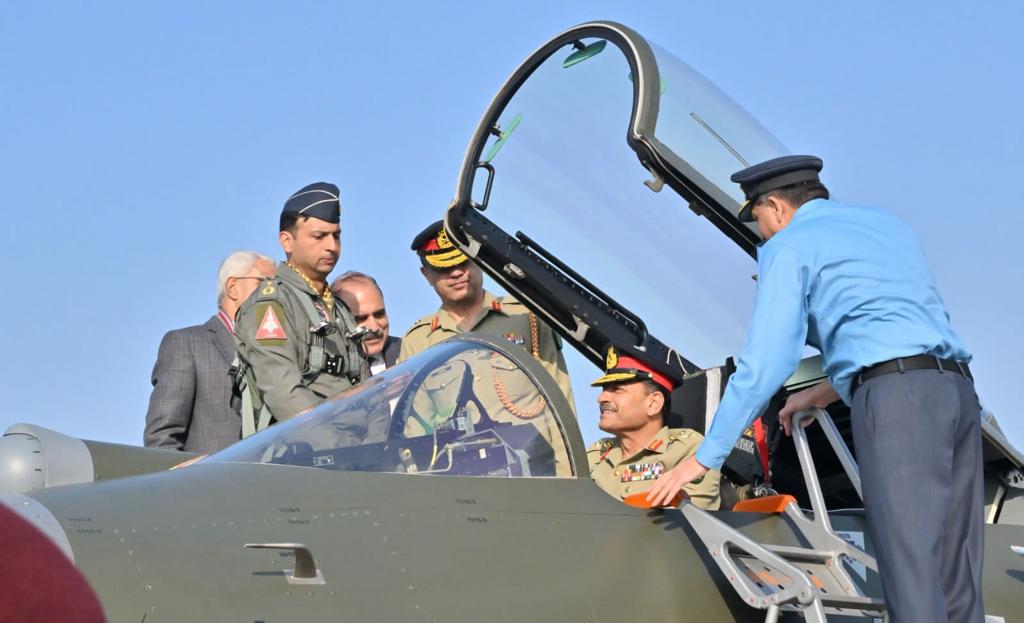
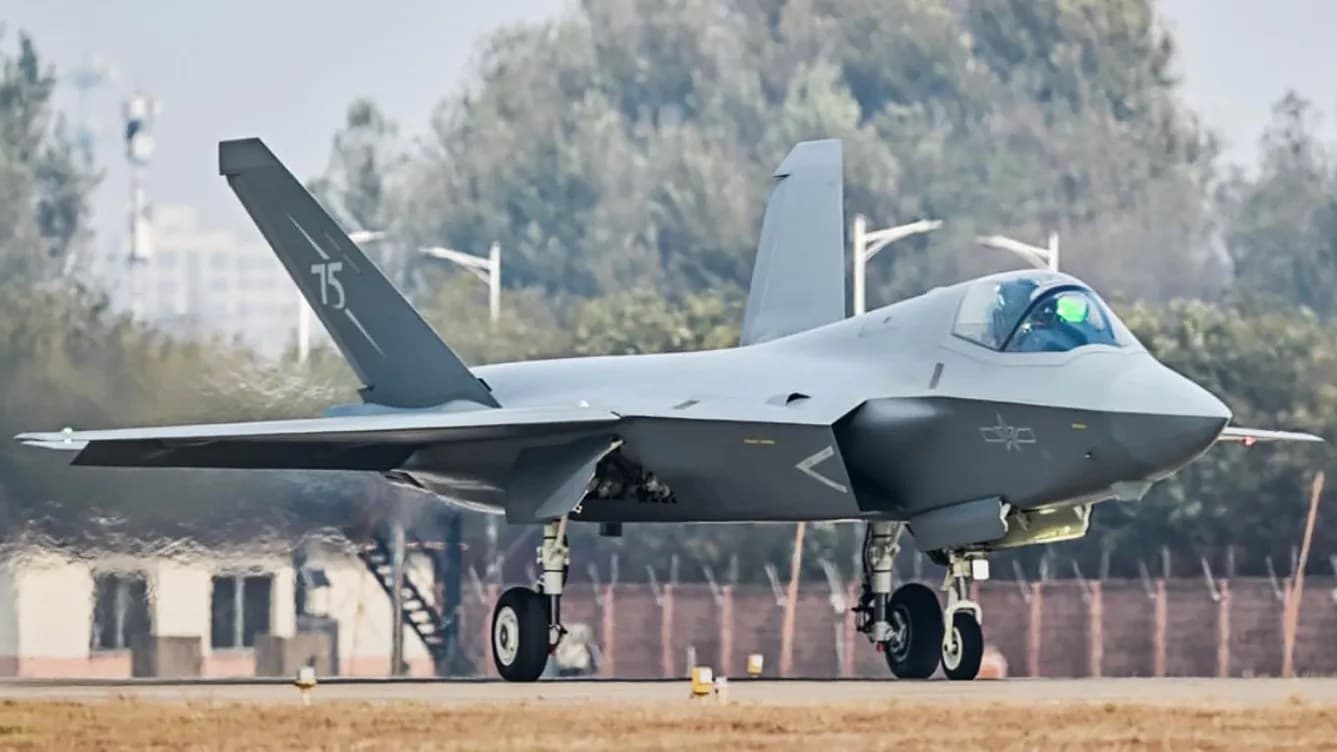
Today, under the leadership of Chief of the Air Staff Air Chief Marshal Zaheer Ahmed Baber Sidhu, the PAF continues its transition into a “Next Generation Air Force.” With stealth platforms, advanced unmanned attack fleets, and active cyber commands, the force stands ready to counter grey-zone warfare.
Yet, the bedrock of the PAF remains its human capital—the legacy of its Shuhada. As the Air Chief accurately observed at the Air Headquarters Martyrs’ Day ceremony, the sacrifices of the fallen are not dead history; they are a living, breathing blueprint of duty. The modern airmen of Pakistan stand ready, scanning the horizons, carrying forward a sacred trust that ensures the green and white flag always flies highest in the sky.